

“The most valuable assets of a 20th-century company were its production equipment. The most valuable assets of a 21st-century institution, whether business or nonbusiness, will be its knowledge, workers, and their productivity.”
— Peter F. Drucker
Table of Contents
The Barrier to AI in Field Service Isn’t Tech—It’s Knowledge
Field service isn’t just facing a labor shortage—it’s facing a memory crisis
Experienced technicians are retiring at a rate the industry can’t replace.
One global survey found that 40% of field service technicians are expected to retire within the next decade, leaving a massive gap in expertise. At the same time, new hires take too long to ramp up(often 6 to 9 months before they can operate independently) and customers are demanding faster, more consistent fixes than ever before. The pressure is mounting from all sides.
Many service leaders have turned to AI as a solution. The promise is enticing: faster troubleshooting, predictive maintenance, and scalable self-service. But despite the hype, very few organizations are seeing measurable impact.
Not because the technology isn’t capable, but because AI systems don’t have access to the most valuable information: the practical, problem-solving knowledge inside your experts’ heads.
“U.S. knowledge workers waste 5.3 hours every week either waiting for vital information from their colleagues or working to recreate existing institutional knowledge.”
—Panopto Workplace Knowledge and Productivity Report, 2018
Every day, tribal knowledge disappears from the field. It’s the little things: a temporary fix that keeps equipment running, a clever workaround for an outdated part, or the subtle sound that signals a failing component. These insights rarely make it into manuals or databases.
Instead, they vanish in the moment, lost to turnover, retirement, or the pace of work. And when that knowledge walks out the door, the costs compound. New hires struggle longer. Service quality drops. Repeat visits climb. Customers lose patience.
AI tools, which learn from structured data, end up guessing instead of guiding.
This white paper will outline:
- Why traditional documentation and training systems can’t keep up
- The real business cost of inaction
- A new approach to capturing frontline expertise in real time
- How leading service teams are turning everyday service calls into reusable, AI-ready knowledge
By treating knowledge as a strategic asset—something that grows in value as it’s captured, shared, and reused—service leaders can unlock measurable results.
The payoff is significant: higher first-time fix rates, faster onboarding, stronger AI, and the confidence that expertise isn’t walking out the door but fueling the next generation of service excellence.


The Service Gap at a Glance
46% older
46% of North American field techs are 50+ and 50% of techs in EMEA are 50+ (Field Nation)
$30B lost
U.S. enterprises lose over $30 billion every year due to knowledge loss (Fast Company)
61% stuck
61% of service leaders cite “lack of usable knowledge” as the biggest barrier to AI success. (Service Council)
The Service Gap is a Knowledge Crisis
Field service leaders have been sounding the alarm for years: the gap is growing
But what’s often overlooked is what leaves the business long before the job titles do—practical, hard-earned knowledge.
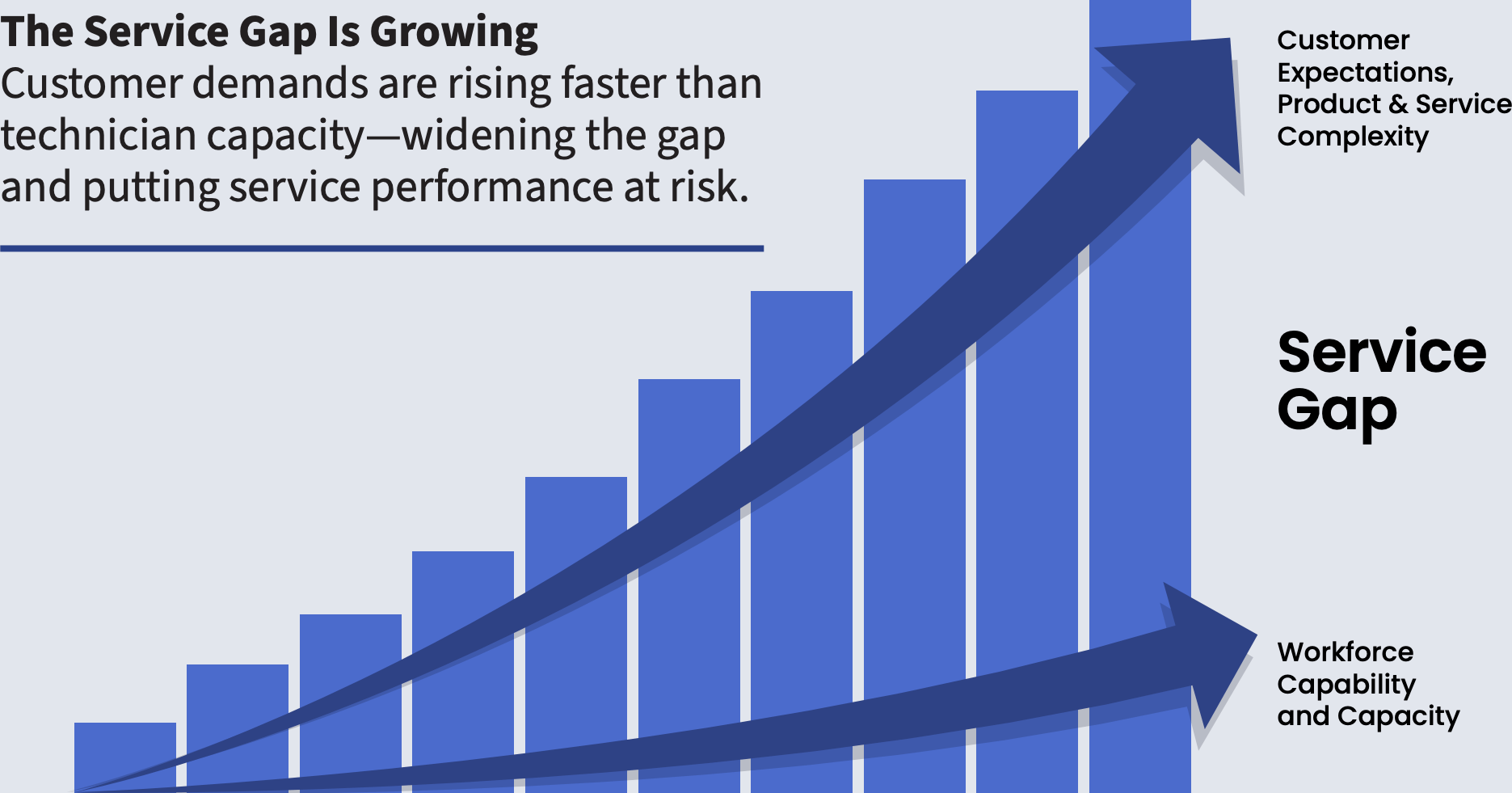
Across industries, veteran technicians are retiring faster than companies can replace them. Newer hires arrive with less hands-on experience. Meanwhile, products are getting more complex. Service windows are tighter. And customers expect fast, expert resolutions every time.
It’s not just a staffing issue… it’s memory
This tacit knowledge—the kind you learn by doing, not reading—rarely shows up in standard operating procedures or training materials. It’s the diagnostic shortcut for a specific model. The fix a tech uses when the documentation falls short. The judgment call based on hearing, not seeing.
And once it’s gone, it’s gone
Static systems can’t keep up
Most organizations still rely on text-based systems like PDFs, SharePoint folders, and legacy knowledge bases to train new technicians.
But these tools are slow to update, hard to navigate, and disconnected from how work actually happens in the field.
- Best practices aren’t being captured in the moment
- Onboarding takes longer
- AI can’t learn with the right data
The result? Inconsistent service quality, rising support costs, and new hires left without the guidance they need to succeed.
The industry Is losing its memory
This knowledge drain isn’t hypothetical—it’s happening now. According to a global study, the talent shortage could leave 85 million jobs unfilled by 2030, costing the economy $8.5 trillion in lost productivity. Field service will be among the hardest-hit sectors.
Organizations that will thrive in this environment are those that rethink how knowledge is captured, shared, and used. They’re not just replacing retiring workers. They’re preserving the insights those workers leave behind—and using them to build smarter, more scalable service teams

“We aren’t just losing people—we’re losing decades of experience that never made it into a manual.”
—Field Service Director, Global OEM
$8.5 trillion
Lost productivity cost resulting from 85 million unfilled jobs through 2030
The Real Cost of Doing Nothing
Many field service teams recognize the widening knowledge gap—but few act on it.
Every field service leader feels the pressure: shrinking teams, rising complexity, and the constant churn of frontline talent. Yet many convince themselves that standing still is the safer choice. Wait until next quarter. Wait until budget approval. Wait until AI “gets better.”
But waiting isn’t neutral.
Doing nothing is the most expensive decision of all.
Onboarding slows down
New hires spend weeks shadowing instead of learning. When training depends on outdated documents instead of real solutions, ramp time stretches from weeks to months.
Technicians burn out
When frontline teams can’t easily find answers, they escalate, repeat steps, or lean on colleagues who are already overloaded. Morale drops. Attrition rises. And every departure takes valuable knowhow out the door
Customers lose patience
Missed SLAs and repeat visits frustrate customers and erode trust. Whether the problem is staffing or systems doesn’t matter. Customers expect fast, accurate fixes.
Manual documentation doesn’t scale
Most companies depend on a handful of SMEs to write down solutions. But the process is slow, reactive, and usually out of date by the time it’s published. Good content gets lost inside disconnected platforms, while the knowledge that matters most, the in-the-moment fixes, goes undocumented.
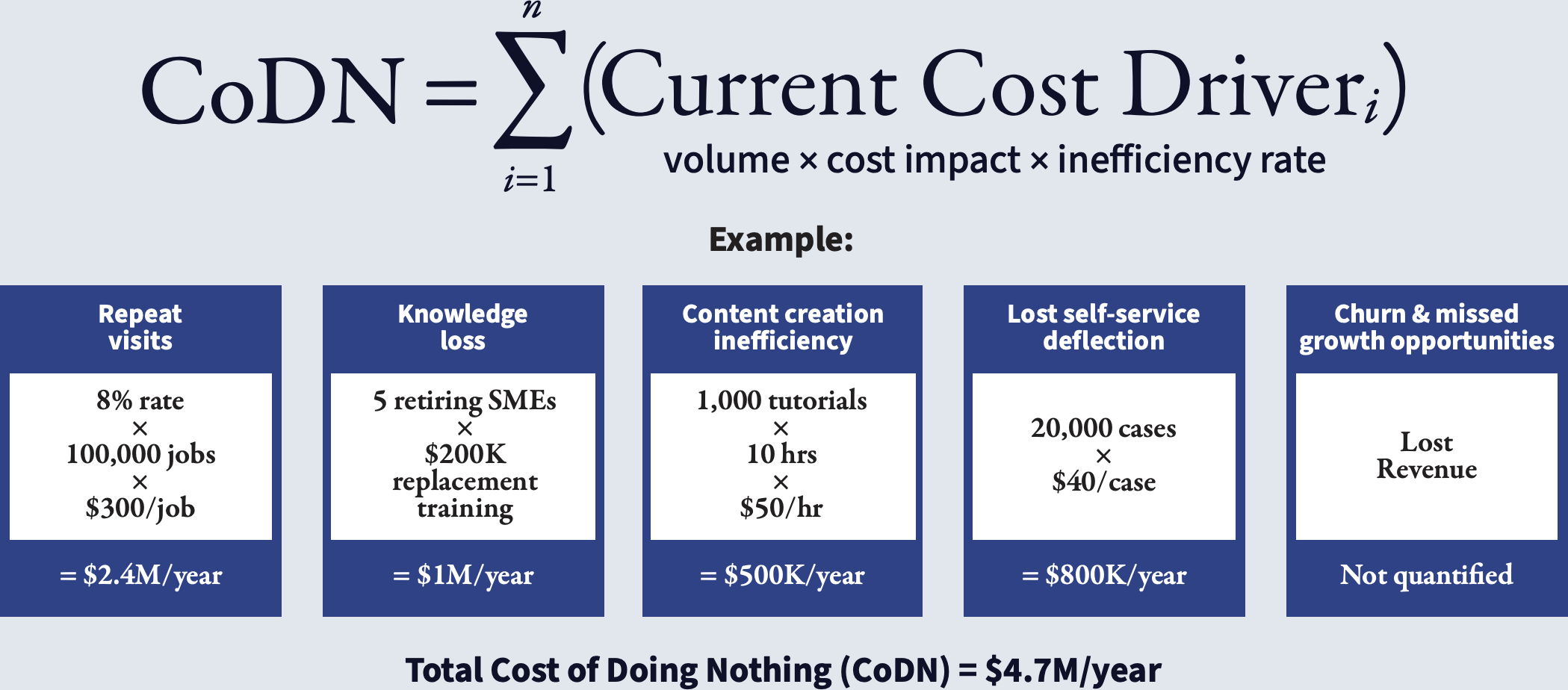
That’s why we use the Cost of Doing Nothing (CoDN) formula.
It’s a simple way to quantify the hidden drains on your business: repeat visits, knowledge loss, content inefficiency, missed self-service, churn, and lost revenue. When you run the numbers, the cost is staggering. One example: repeat visits alone cost an average of $2.4 million annually—losses that AIpowered visual support could help prevent. The formula makes one truth clear: waiting doesn’t save money. It compounds the losses.

$2.4 million
Annual cost of repeat visits that may have been avoided with AI-powered remote visual support
The Cost of Doing Nothing (CoDN) Formula:
“Every quarter we delay capturing tribal knowledge, we pay twice— once in lost productivity and again when another veteran tech walks out the door.”
—Field Service Leader
Legacy knowledge systems were built for documents, not for the dynamic, in-field content that modern AI needs. PDFs, SharePoint folders, and binders don’t capture the real-time context of a repair—the audio, video, annotations, or quick decisions that make all the difference.
Without that context, AI can’t connect the dots, and technicians can’t find the guidance they need.
When knowledge isn’t captured in the flow of work, the impacts ripple across the organization. Onboarding takes longer. Resolution times stretch. Repeat visits multiply. Attrition strips away hardwon expertise.
AI systems underperform because they’re starved of structured data. These aren’t abstract issues—they are measurable drains on performance and profitability.
Quantify the effect of the status quo
The chart on the opposite page breaks down these drains into clear categories: extended resolution times, repeat visits, knowledge loss, high creation costs, slow onboarding, missed self-service, and customer churn.
Each has a direct formula for quantifying the losses in dollars and hours. Together, they reveal a simple but powerful truth: the longer knowledge capture is delayed, the more expensive inaction becomes.
Breaking the cycle requires a shift in approach.
Instead of relying on manual documentation, service organizations need tools that capture knowledge automatically, as work happens, and make it instantly useful to both people and systems. This isn’t about adding another layer of process—it’s about transforming expertise into structured, contextual knowledge that accelerates fixes, strengthens AI, and restores customer confidence.
The cost of doing nothing is real, measurable, and growing. The only question left is how long you can afford to keep paying it.

“We realized our knowledge base wasn’t a library—it was a graveyard. Static PDFs couldn’t keep up with the pace of the field.”
—VP of Service, Global Telecom
The Ways Inaction Can Impact Your Bottom Line
| Category | Cost of Doing Nothing | How to Quantify |
|---|---|---|
| Extended Resolution Times | Cost of Doing Nothing: Troubleshooting & resolution takes longer due to lack of readily accessible expertise. | How to Quantify: (Average time per job × labor cost per hour × jobs/year) − target reduction. |
| Repeat Visits / First-Time Fix (FTF) | Cost of Doing Nothing: Incomplete knowledge sharing leads to repeat dispatches. Industry leaders cite FTF as the #1 cost/productivity KPI. | How to Quantify: (Repeat visit rate × total jobs/year × cost per truck roll). |
| Knowledge Loss / Attrition | Cost of Doing Nothing: Retiring experts take undocumented know-how with them. US companies lose $31.5B annually to this issue. | How to Quantify: Estimate % of expert workforce attrition × cost to replace + retrain × lost productivity window. |
| High Knowledge Creation Costs | Cost of Doing Nothing: Manual creation of documentation & tutorials is slow and resource-intensive. | How to Quantify: (Hours to produce content × hourly rate × content volume/year) − AI-assisted time reduction. |
| Onboarding & Ramp Time | Cost of Doing Nothing: New hires take longer to become productive without guided, contextual, multimodal knowledge. | How to Quantify: (Onboarding duration × cost per new hire × hires/year) − target ramp reduction. |
| Missed Self-Service Deflection | Cost of Doing Nothing: Tribal knowledge is the norm. The Voice of the Field Engineer 2025 reports that “calling a colleague” is the #1 source of knowledge when facing a complex situation. | How to Quantify: (Deflectable case volume × cost per case) − expected deflection rate. |
| Customer Churn Risk | Cost of Doing Nothing: Slower resolutions + inconsistent quality erode satisfaction, impacting renewal and upsell revenue. | How to Quantify: (Churn % due to service issues × revenue at risk). |
Why Most Knowledge Efforts Fail
Legacy systems weren’t built for the way technicians work toda
The current methods for capturing and sharing expertise weren’t built for the pace, complexity, and realities of modern field work.
Today’s frontline teams face new product rollouts, frequent software updates, and an accelerating retirement wave among senior technicians. Documentation and training struggle to keep up.
Companies invest heavily in knowledge management systems, documentation processes, and training programs, but the results are still falling short.
Money is spent, but he frontline experience hasn’t improved fast enough. Knowledge updates lag and technicians on the ground are left waiting for answers that rarely arrive on time.
Outdated training slows everything down
Even the best-designed onboarding programs are under pressure. Training content is often updated manually—by an internal team or outsourced providers—making it nearly impossible to keep materials aligned with evolving processes and technologies. New repair steps, safety protocols, or equipment changes may take weeks or months to be documented, leaving teams to improvise.
One enterprise service leader described their system as “fully manual and time-consuming,” with each knowledge update taking four to six weeks. That bottleneck ripples across the workforce. New hires can take 6–9 months to reach full productivity—an eternity in industries where customer satisfaction depends on quick, accurate fixes.
That lag isn’t only inefficient, it’s expensive. Recruiting, training, and onboarding a green hire field service tech can cost approximately $250,000 over two years before they reach expert experience levels. Every extra month is money left on the table.
Legacy KMS tools weren’t built for this
Most knowledge systems were designed to store documents, not to support fast, visual, in-context learning. They were built for a different era, where static manuals and PDFs were considered sufficient.
Today, those same systems create friction. They prioritize long text over rich media like video, annotations, or screenshots that technicians rely on in the field. They operate in silos, cut off from FSM, CRM, and AI platforms, forcing teams to jump between systems to piece together information.
And because they can’t adapt in real time, the information they provide is often outdated the moment it’s published.
The result is a widening gap between the way knowledge is created and the way technicians actually need to learn. Legacy systems can’t deliver that. And until the approach to knowledge capture changes, the cost of this gap will continue to grow

“We spend weeks teaching new techs in a classroom, and they still need months of trial and error in the field to get confident.”
—VP of Field Operations, Global Manufacturing
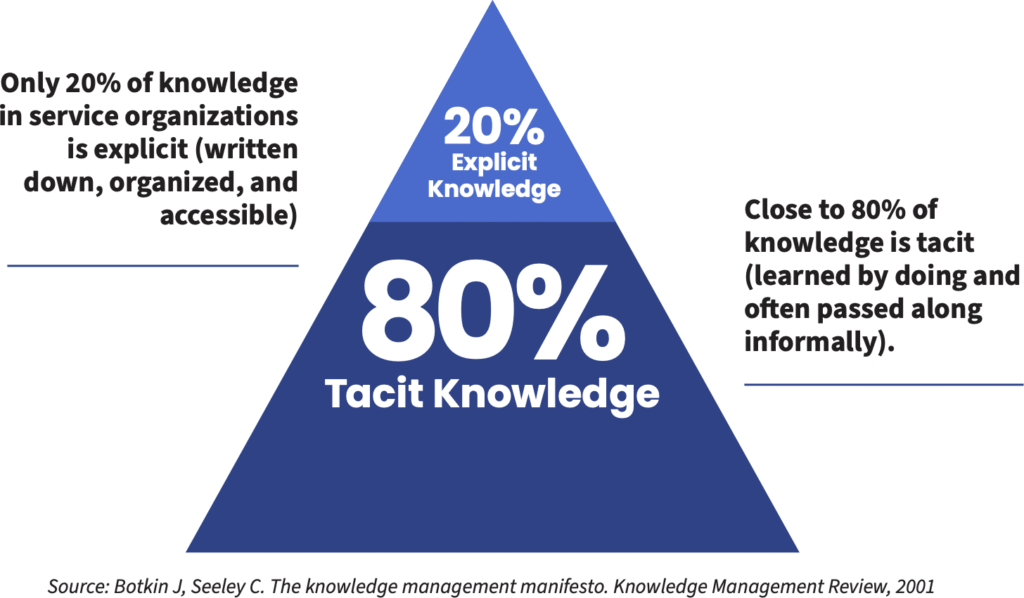
Only 20% of knowledge in service organizations is explicit (written down, organized, and accessible)
Close to 80% of knowledge is tacit (learned by doing and often passed along informally).
20%
Explicit
Knowledge
80%
Tacit Knowledge
Why Your Onboarding Can’t Keep Up
Manual training and outdated tools delay productivity and drive up the cost of every new hire
Most new technicians operate at only ~50% productivity during the first year. Across field service organizations, training and onboarding programs are under strain.
Companies are moving fast to fill roles left by retiring technicians—but their training systems aren’t built for the pace or complexity of today’s service environment.
Many programs still rely on long-form manuals, slide decks, or job-shadowing to ramp up new hires.
The result? Inconsistent learning experiences, slower time to productivity, and knowledge gaps that surface when it matters most—on the job.
Even the best-designed onboarding programs are struggling to keep pace with the demands of modern field service. Training content is often updated manually—by a small internal team or outsourced providers—making it hard to keep materials aligned with evolving processes.
One enterprise service leader described their system as “fully manual and time-consuming,” with each knowledge update taking four to six weeks to complete. As a result, field teams reported that new hires took 6–9 months to reach full productivity—far slower than organizations need in today’s fast-moving environments.
That lag isn’t only inefficient—it’s expensive
Recruiting a new field service tech with an average salary of around $45K in roles like copier or industrial support will cost approximately $7,500– $8,000 over their first 90 days in lost productivity and basic training overhead.
Extrapolating to longer onboarding periods, it’s realistic to see total onboarding costs (training, admin, shadowing) climb into the mid-five-figures per person. That’s a steep price to pay just to get someone up to speed.
At the same time, the bar is rising. Products are more complex. Customers expect faster, more accurate fixes. And while AI tools are being introduced to support technicians, they often underdeliver—simply because they’re not learning from real-world, up-to-date information.
Bridging the gap
To keep up with rising expectations—and rising attrition—service leaders need to rethink how they train, support, and scale their teams. That starts with treating knowledge not as a static document, but as a living, evolving system.

“Everytime we lose an experienced field technician, that’s $250K and two years down the drain.”
—Industrial Manufacturing Service Leader
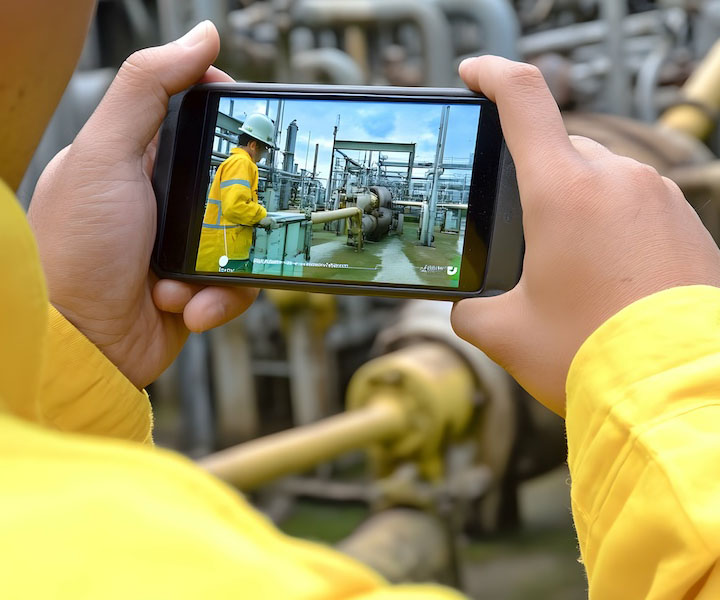
Technicians want better tools
Today’s service environments evolve constantly. Technicians need to keep learning to stay effective—especially as organizations introduce new technologies like IoT, augmented reality, and AI-guided diagnostics.
- Technicians under 35 report spending up to 59% of their work day on documentation and data entry
- The most requested (but unavailable) support tool was “live, in-the-moment troubleshooting help”
- Less than 15% view AI or AR negatively—most are ready for change
Source: Service Council 2024 Voice of the Field Service Engineer
Shifting to Remote Visual Intelligence
Capture expertise as it happens—making knowledge continuous, visual, and actionable
Field service leaders have invested heavily in AI tools, yet many find the results underwhelming.
The reason isn’t a lack of technology. It’s in the quality and quantity of the knowledge AI receives. AI systems are being fed PDFs, outdated SOPs, and fragmented knowledge base articles. What’s missing is a steady flow of structured, real-world expertise captured at the moment it happens. The kind of insight that happens during service calls but rarely gets recorded.
This is where Remote Visual Intelligence (RVI) changes the equation. The real innovation isn’t just in the technology—it’s in the mindset.
With RVI, knowledge is no longer a static archive assembled after the fact—it becomes a living system: a visual record capturing, in real time, exactly how a task is performed, shared across teams, and continuously refined.
Seeing is believing: Why RVI matters
By embedding knowledge capture into daily work, RVI removes the burden from technicians while creating measurable value for the business.
- Speeds up training by giving new hires access to real-world walkthroughs.
- Improves consistency by standardizing how fixes are captured and shared.
- Builds trust with frontline teams with content that reflects how work actually gets done.
- Powers AI with structured, multimodal data it can finally learn from.
It closes the loop between human expertise and machine intelligence—making both stronger.
Visual intelligence isn’t a switch you flip. It’s a maturity path with clear steps along the way.
In this new operating model, knowledge creation becomes a shared responsibility across the organization.
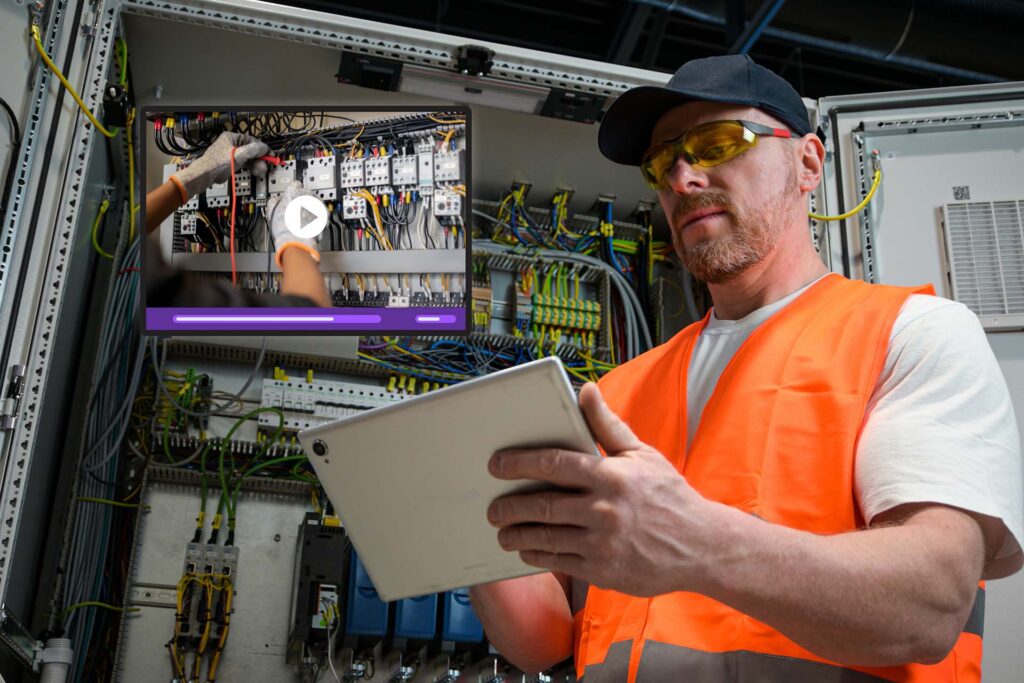
AI now handles 90% of the heavy lifting in the back office. It captures, structures and organizes knowledge while learning directly from your experts. This allows them to stay focused on what they do best: getting the job done in the field.
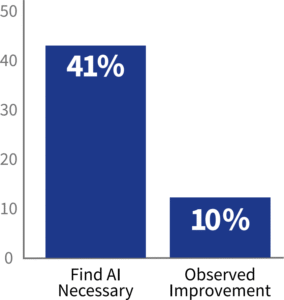
“Service leaders want their AI project to increase revenue with 41% claiming it’s necessary, but only 10% claim to have observed improvement.”
—Service Council, 2025
The Remote Visual Intelligence Framework
| Collaborate | Capture | Create | Curate | Diffuse | |
|---|---|---|---|---|---|
| People | Collaborate: Live, visual technical support with real-time guidance | Capture: Automated visual session recording and metadata enrichment | Create: AI-generated, step-by-step “How-To” tutorials | Curate: Human review to ensure accuracy, clarity, and brand consistency | Diffuse: Distribute validated content across teams, customers, and AI systems |
| Technology | Collaborate: Remote visual support platform with AR guidance tools | Capture: Video/AR session capture with contextual tagging | Create: AI-driven multimedia knowledge generation | Curate: Editing and version control within a centralized library | Diffuse: CRM/FSM/KMS/AI integration |
| Process | Collaborate: Encourage visual knowledge contribution as part of daily work | Capture: Define knowledge to be captured | Create: Standardized formats for visual “how-to” guides | Curate: Compliance checks, quality standards, and taxonomy alignment | Diffuse: Defined distribution workflows and best-practice adoption tracking |
Stop Losing Knowledge, Start Building Intelligence
Create a living system—captured visually and contextually, as work is being done
As veteran technicians retire and turnover accelerates, critical knowledge is leaving the business faster than it’s being captured. These aren’t just formal procedures—they’re the insights earned through years of hands-on experience.
At the same time, organizations are investing in AI tools and knowledge systems that can’t deliver full value because they’re missing what matters most: field-tested, real-world expertise.
Remote Visual Intelligence makes it possible to capture that know-how in the moment, while your experts are still on the job. There’s no need for massive process change—RVI integrates into the workflows technicians already use, delivering immediate value. It transforms service interactions into structured, visual knowledge that feeds both your people and your systems.
In field service, visual matters. Showing how something is done captures the detail, nuance, and decision-making that words alone often miss.
And when that kind of knowledge becomes part of your training and AI models, everything improves— onboarding, performance, consistency, and confidence on the front line.
Every day that frontline expertise goes uncaptured, you lose more than knowledge, you lose speed, efficiency, and customer trust. Onboarding takes longer. Fix rates drop. Costs climb. Customers grow frustrated.
Meanwhile, forward-looking competitors are already preserving their know-how, accelerating training, and feeding their AI systems the data they need to get smarter.
The way forward is clear.
“For the first time, every service call becomes a reusable training asset. We don’t just solve a problem once— we solve it for everyone.”
—VP of Service Operations, Telecom
Knowledge must be treated as a living, evolving system—not a static archive. Capturing expertise in the moment of service ensures that it’s accurate, relevant, and immediately usable.
Video plays a critical role, preserving not just the steps of a task, but the subtle techniques and cues that written documentation often misses.
Every interaction in the field becomes an opportunity to strengthen your workforce, refine your processes, and power smarter AI.
RVI closes the loop between human expertise and AI, creating a system where each makes the other more effective. For service leaders, the decision isn’t whether to make the shift—but how fast they can get there.


Measuring the ROI of Remote Visual Intelligence
50%
Faster Onboarding
The average time for new field technicians to reach full productivity is 6 to 9 months. Organizations using visual, real-world training tools have reported ramp-up time reductions of up to 50%.
Source: InfiniteFMS, ServiceMax
40%
Lower Support Costs
SightCall customers implementing visual remote support reported reducing Tier 2 escalations by up to 40%. Field teams using peer-created tutorials and contextual guidance saw escalation reductions of 25% or more.
Source: SightCall, FieldTechNow
20%
Higher First-Time Fix
Organizations using structured, video-based knowledge systems reported up to a 20% increase in first-time fix rates. Some also saw service cycle times improve by 15–30% as a result of easier access to real-world fixes.
Source: Future of Field Service, Zinier
Fix it right the first time
Deliver expert help instantly
See how SightCall transforms the way you serve.