

GE Healthcare Brings Critical Medical Equipment Back Online Faster with SightCall
When a medical imaging system goes down, the impact is immediate. Urgent procedures are delayed, schedules unravel, and both patient care and hospital revenue are affected.
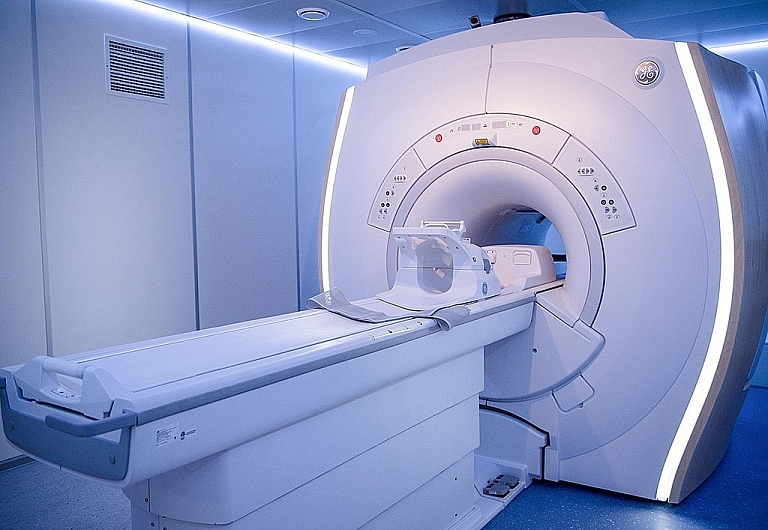
For GE Healthcare, whose teams support MRI, CT, and ultrasound systems worldwide, reducing downtime isn’t just an operational goal. It’s a clinical imperative.
But diagnosing and repairing complex equipment in the field often required multiple site visits, long back-and-forth conversations with specialists, and days before a system was fully operational again.
GE Healthcare needed a way to collapse that time. They found it with SightCall.
Impact Highlights
-
Repair turnaround reduced from multiple days to hours
-
Average remote support call time of 40 minutes
-
Hundreds of thousands of dollars saved annually in travel costs
-
Meaningful reductions in equipment downtime across regions
The Challenge: Every Hour of Downtime Carries a Cost
GE Healthcare’s service teams operate in high-stakes environments. A downed MRI or CT scanner can mean lost diagnostic capacity, canceled appointments, and growing pressure on already stretched clinical staff.
Before SightCall, resolving complex issues often depended on whether the right expertise was physically present. If it wasn’t, technicians either waited for guidance or returned later with additional support.
That drove up travel costs and extended downtime. Even well-trained technicians lacked a fast way to visually collaborate with experts when it mattered most.
What GE Healthcare needed was not more documentation or another tool to manage after the fact. They needed a way to bring expertise into the moment of service.
The Turning Point: Bringing the Expert to the Field Virtually
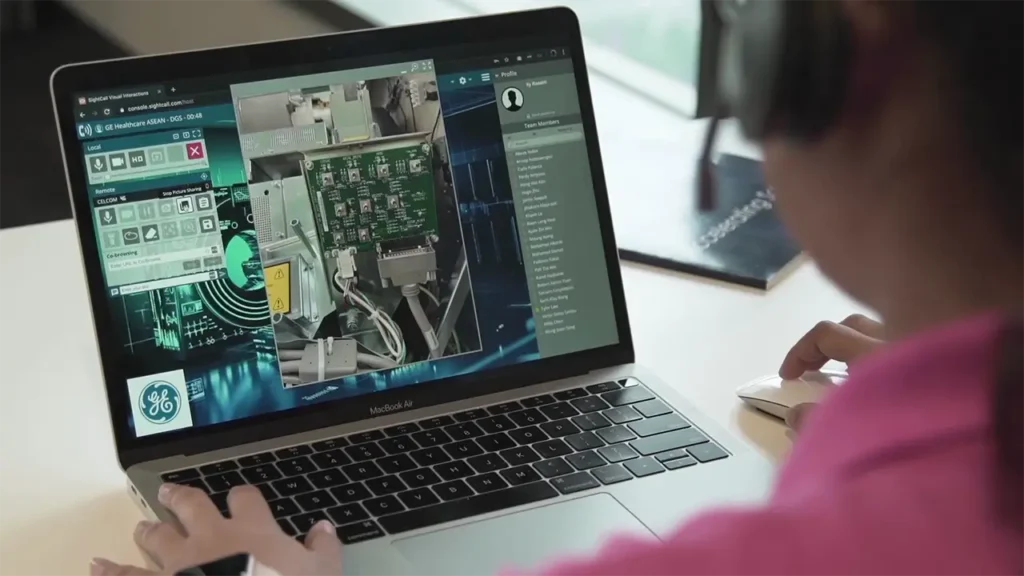
GE Healthcare adopted SightCall to give field technicians instant access to remote experts through live video and augmented reality.
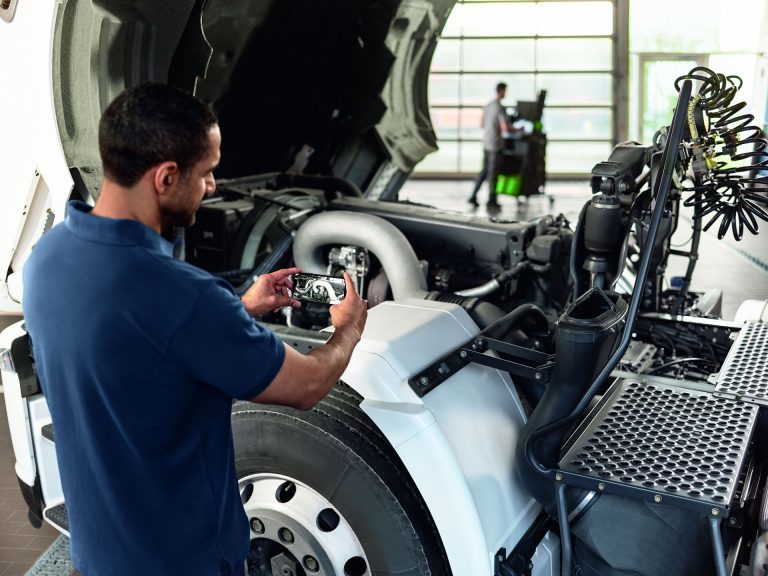
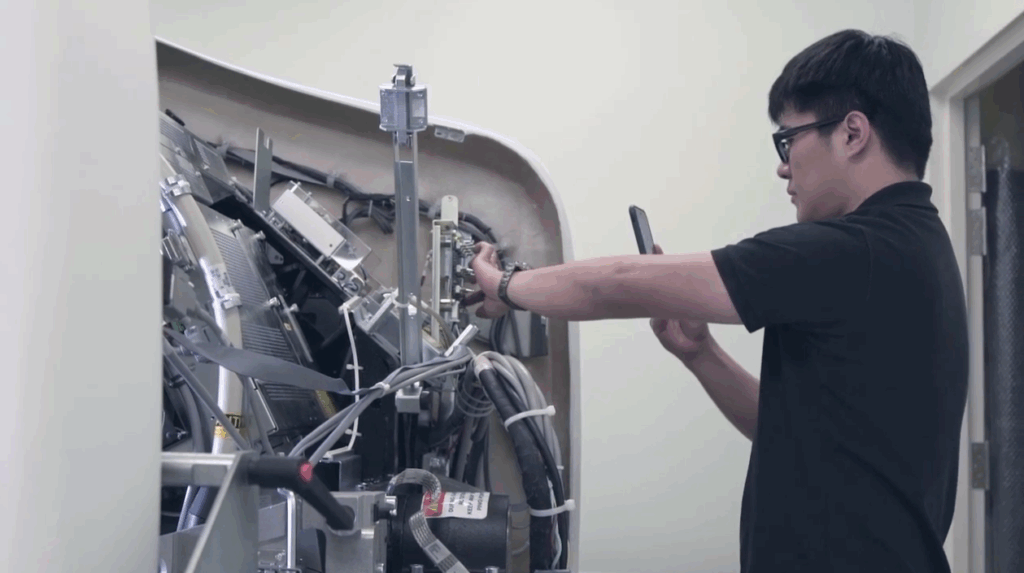
Instead of describing issues over the phone or waiting for a specialist to arrive onsite, technicians could now show exactly what they were seeing. Remote experts could annotate live video, guide repairs step by step, and validate fixes in real time.
Crucially, the solution worked in real-world conditions. SightCall performed reliably even in low-bandwidth environments and met the strict security and compliance standards required in healthcare settings. This made it viable not just in ideal conditions, but across GE Healthcare’s global footprint.
“By using SightCall, we ensure our field teams are partnered directly with our technical experts, making them part of the repair and troubleshooting network every step of the way."
Service Operations Manager for Asia, Middle East & Africa
How SightCall Changed the Repair Experience
With SightCall in place, service interactions became more collaborative and far more efficient.
A technician encountering an unfamiliar issue could initiate a visual support session in minutes. The remote expert immediately gained context through live video, could draw directly on the screen to indicate components, and guide the repair with precision. Photos and data captured during the session flowed directly into service records, reducing manual follow-up.
What once required multiple visits could often be resolved in a single session.
"We can virtually place a technical expert next to a field engineer on a site by using the interactive video and augmented reality features of this application."
Service Operations Manager for Asia, Middle East & Africa
The Results: Faster Resolutions and Less Downtime
The impact was measurable and immediate.
Maintenance turnaround times dropped from an average of several days to as little as six to eight hours. Average visual support sessions lasted around 40 minutes, often eliminating the need for follow-up visits entirely. Travel costs declined sharply, generating hundreds of thousands of dollars in annual savings.
More importantly, critical diagnostic equipment returned to service faster. Independent industry research estimates that MRI downtime can cost hospitals tens of thousands of dollars per year per machine. By accelerating repairs, GE Healthcare helped protect both hospital revenue and patient access to care.
Why It Worked for GE Healthcare
SightCall succeeded because it aligned with how field service actually works.
The platform didn’t require specialized hardware or complex setup. It worked on the devices technicians already carried. It performed reliably in low-connectivity environments. And it respected the security and compliance realities of healthcare.
Instead of replacing the human expertise of GE’s technicians, SightCall amplified it. Knowledge traveled instantly, without waiting for flights, schedules, or repeat visits.
A Blueprint for Modern Field Service
For GE Healthcare, SightCall became more than a support tool. It became a way to fundamentally rethink how expertise is delivered in the field.
By connecting technicians and specialists visually, in the moment of need, GE Healthcare reduced downtime, lowered costs, and improved service outcomes where they matter most.
At the point of care.